
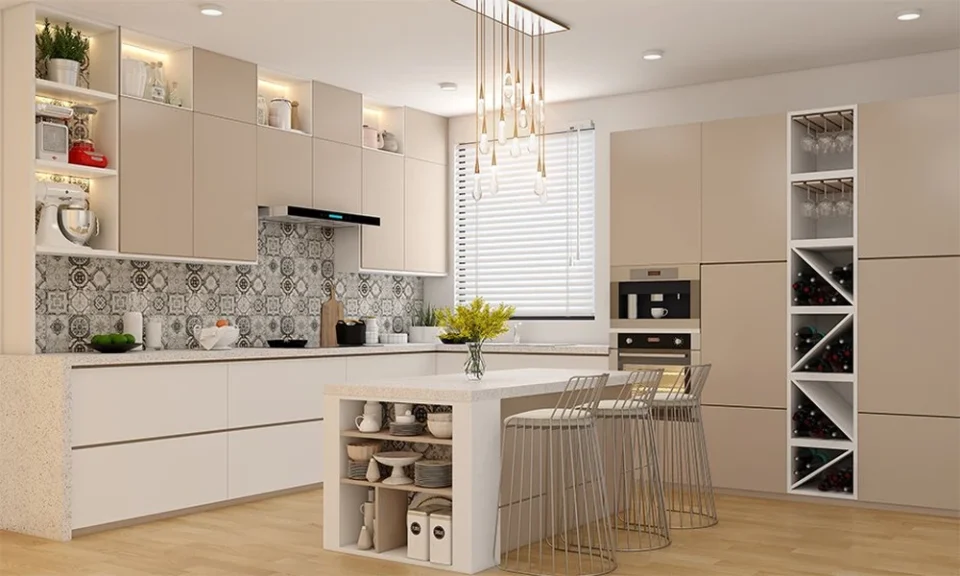
Pendant lights make a kitchen feel designed. Hung over an island or a sink, they add shape, color, and a place for the eye to rest. They also have to work. A pendant that looks great and leaves your cutting board in shadow is a disappointment. The key is to understand where pendants fit in the overall lighting plan.
Kitchens need layers
Lighting is often described as working in three layers: ambient, task, and accent. The Department of Energy’s Department of Energy’s residential lighting strategy guideline lays out this model and explains that task lighting meets the visibility needs of functional activities such as food preparation. It also notes that because kitchen cabinets and appliances define task areas, task lighting is a natural part of any kitchen plan.
Pendants can serve more than one layer. Over an island, they contribute ambient glow and also illuminate the work surface. Over a sink, they act mostly as task lighting. The more clearly you identify the job, the easier it is to choose the right size, brightness, and shade.
Sizing and spacing
Proportion is the most common problem with pendants. A few guidelines help:
- Hang pendants about thirty to thirty-six inches above the counter surface so they light the work area without blocking sight lines.
- Leave roughly twenty-four to thirty inches between the centers of neighboring pendants over an island.
- Keep the total width of the group a little shorter than the island so it does not feel crowded.
Odd numbers, such as two or three, often look balanced, but the right count depends on the island length. Measure first, then mark positions with tape before you commit.
Shade and light direction
The shade determines where the light goes. Open or clear shades throw light in many directions and look airy. Opaque metal shades direct light downward, which is excellent for task work but leaves the ceiling darker. Frosted glass softens the output and reduces glare. If the pendants will be the main task light over an island, choose shades that direct light onto the counter rather than into your eyes.
Brightness and color
Plan for enough light to see what you are doing, and use a dimmer so the same pendants can serve a family dinner or a late-night snack. Keep color temperature consistent with the rest of the kitchen. Warm white feels welcoming, while a slightly cooler tone looks crisp over a work surface. Mixing temperatures in one room can look accidental.
Pair pendants with other light
Pendants rarely carry a kitchen alone. Under-cabinet lights brighten the counters beneath the upper cabinets, recessed fixtures fill in the general glow, and a small accent light can show off open shelving. Relying only on pendants can create pools of light and dark corners. A mix keeps shadows low and the room comfortable.
Choosing a style
When you compare the best kitchen pendant lights side by side, think about materials and maintenance. Glass and metal wipe clean easily, while woven or textured shades collect grease in a cooking area. Consider how the pendant will look from the dining room or living room if your kitchen is open. Pick finishes that match your faucet, cabinet hardware, or other fixtures so the room feels coordinated.
Installation notes
Check the weight of the pendants and the support in the ceiling. Heavy glass pendants may need a reinforced box. Confirm the cord or rod length gives you the hanging height you want, and ask an electrician to handle the wiring if you are not experienced.
The takeaway
Treat pendants as one part of a layered plan. Size and space them to fit the island, direct the light where you work, add a dimmer, and combine them with under-cabinet and ambient lighting. Done that way, the pendants become the feature you wanted and a tool you appreciate every day.
