
Title: Yamaha Products: From Receivers to Motorcycles – What Owners Need to Know
Description: A practical guide to Yamaha’s diverse product lineup and why the user manual is especially important when the brand spans so many different categories.
Link: https://manualmachine.com/yamaha/
Anchor: brand – “Yamaha”
Yamaha is an unusual brand because it spans an enormous range of product categories under a single name. The same company makes audio receivers, digital pianos, acoustic instruments, motorcycles, outboard engines, power generators, personal watercraft, and professional audio equipment. For owners, this creates a specific kind of confusion when looking up documentation – searching for Yamaha manual without any further context returns results across a dozen unrelated product categories, most of which are irrelevant to the question at hand. This guide walks through the practical considerations for Yamaha owners across the major product categories, explains why the documentation matters particularly for multi-category brands, and describes how to efficiently find the right manual when your search needs to cut through a vast catalog.
Why Yamaha’s Breadth Changes How You Search
When a brand makes products in ten different categories, the model number becomes the most important piece of information you can have during a search. A Yamaha RX-V series number takes you to AV receivers. A YZF model points at motorcycles. A P-series model is a digital piano. A YBR or MT model is again motorcycles but in a different family. Without the exact model number, the brand name alone is nearly useless as a search term because the ambiguity is too wide. Always start by locating the model code on the product itself – on the back of audio equipment, on the frame of motorcycles, on the nameplate of outboard engines, on the underside of keyboards – and use that code as the primary search term.
Audio Equipment: Receivers, Amplifiers, and Speakers
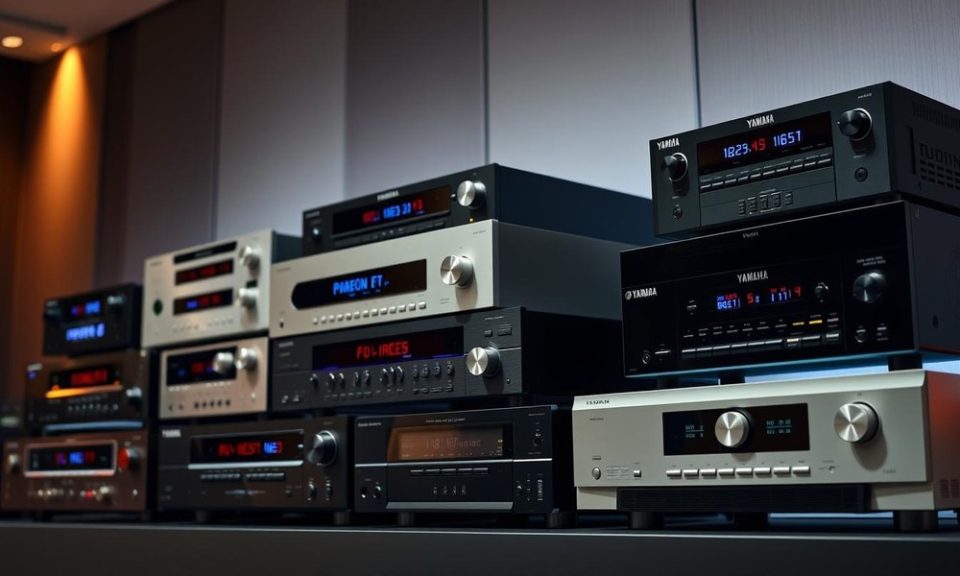
Yamaha’s audio division is probably the most commonly owned category, with AV receivers and stereo equipment present in millions of households. The documentation for these products is genuinely dense, because modern receivers include dozens of input configurations, sound modes, calibration procedures, and network features that are impossible to discover by pressing buttons randomly. The initial setup is where the manual matters most – getting speaker calibration right the first time, configuring the correct input assignments, and setting up network streaming properly all depend on following the documented procedures. A receiver set up without reading the manual will work, but it will not work at the level the product is actually capable of.
Musical Instruments and the Long Tail of Models
Yamaha makes digital pianos, synthesizers, keyboards, guitars, drums, and wind instruments, and each line has dozens of models going back decades. Documentation for older instruments is particularly valuable because these products often stay in active use for twenty or thirty years – an eighteen-year-old Yamaha digital piano is still perfectly playable, but nobody remembers how to access its transposition function without the manual. Searching for Yamaha manuals through a comprehensive archive is frequently the fastest path to finding documentation for older instruments where the official Yamaha support site has rotated away from current hosting. Musicians and music teachers tend to accumulate multiple Yamaha instruments over the years, and a household digital library covering all of them saves significant time.
Motorcycles and Recreational Vehicles
Yamaha motorcycles, ATVs, snowmobiles, and personal watercraft all come with owner’s manuals and service manuals that matter more than on typical consumer products. These vehicles have specific maintenance schedules, fluid requirements, and service intervals that directly affect safety and reliability. The owner’s manual covers routine care and operating instructions. The service manual – sometimes called the workshop manual – is a more technical document that covers actual repair procedures and is worth having even for owners who take their vehicles to a dealer for major work. Routine tasks like oil changes, chain adjustment, or coolant checks are documented clearly and are genuinely accessible to an owner willing to read carefully.
Marine and Outboard Engines
Yamaha outboard engines have their own extensive documentation ecosystem. These engines are used in commercial and recreational contexts for decades, and the documentation needs to cover both daily operation and long-term maintenance. Rigging guides, propeller selection charts, winterization procedures, and emission control information are all documented separately and need to be cross-referenced for proper engine care. Boat owners who have not read the full documentation often miss maintenance steps that matter more in marine environments than in any other category – corrosion prevention, fuel system care, and proper storage procedures are not optional for engines that operate in and around salt water.
Power Equipment and Generators
Yamaha generators, pumps, and small engines are a quieter part of the lineup but matter during specific situations – power outages, remote work sites, emergency backup. The documentation for this category includes important safety information about generator placement, grounding, load capacity, and carbon monoxide considerations that people tend to dismiss until they need the equipment. Reading the manual before a generator is needed rather than during an emergency is one of the simplest preparedness steps an owner can take.
The Practical Approach to Yamaha Documentation
For any household or business that owns Yamaha products across multiple categories – a home with a receiver and a digital piano, a boat owner with an outboard and a generator – building a dedicated digital folder of Yamaha manuals organized by category is worth the small upfront effort. Use filenames that include the model number first, then the product type, then any relevant year information. Store the folder in cloud storage so every document is accessible from a phone when you need it. The investment is about an hour for a full household Yamaha collection, and the payoff is years of never having to re-search for documentation you have already located once. This is particularly useful for the instruments and recreational equipment that tend to stay in service longer than their original paper manuals survive in the household.
– – – – – – – – – –
