
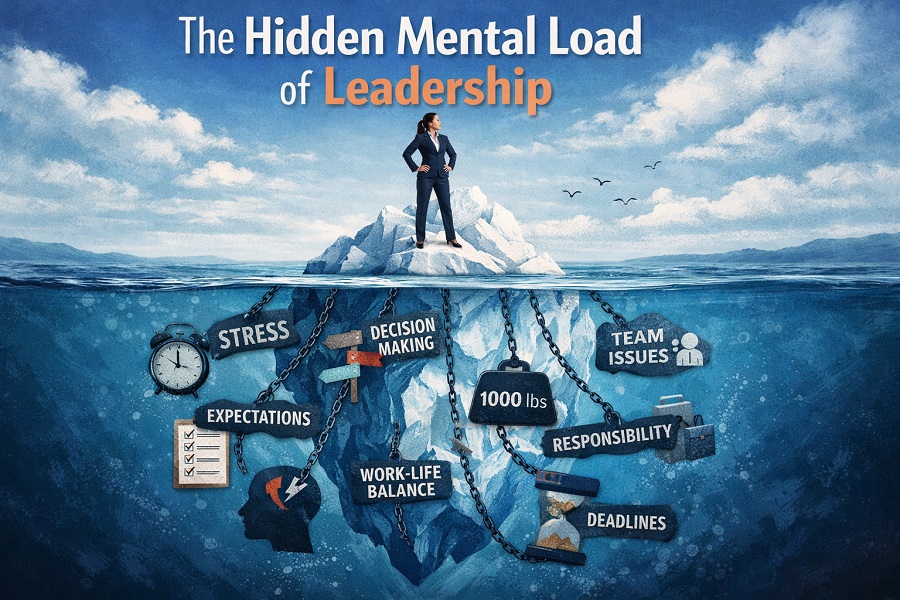
From the outside, leadership often looks like success. Executives are seen as confident decision makers who handle pressure with ease. They run companies, manage teams, and make choices that influence entire organizations.
But what people rarely see is the mental load that comes with those responsibilities.
Leadership positions often involve constant pressure, high expectations, and difficult decisions that affect employees, investors, and customers. Executives are expected to stay calm, think clearly, and lead others even when they are personally under intense stress.
Over time, that pressure can quietly build beneath the surface.
Many leaders become so focused on solving problems for everyone else that they rarely stop to examine their own mental and emotional wellbeing.
Why Leadership Can Feel Isolating
One of the most common experiences among executives is isolation.
When someone holds a leadership position, their role naturally changes the way others interact with them. Employees may hesitate to share concerns openly. Peers may view them more as authority figures than equals.
Even within leadership teams, there can be unspoken pressure to appear confident and composed at all times.
This dynamic can leave executives with very few places where they feel comfortable being honest about the challenges they face.
For example, a CEO may feel uncertain about a major business decision but hesitate to share that uncertainty with their team. A senior executive might feel overwhelmed by the pace of work yet believe they must appear completely in control.
Over time, carrying these pressures internally can become exhausting.
The Weight of Constant Decision Making
Another hidden challenge of leadership is the constant stream of decisions executives must make.
Every day can involve choices that impact hiring, finances, strategy, and long-term direction. Some of these decisions are small. Others may affect hundreds or even thousands of people.
This constant decision making requires intense mental energy.
Psychologists sometimes refer to this as decision fatigue. When the brain processes too many choices without enough recovery time, clarity and focus can start to decline.
Executives may begin noticing symptoms such as:
- Difficulty concentrating
- Increased stress or irritability
- Trouble sleeping
- Mental exhaustion
- Reduced motivation
These symptoms often appear gradually, making them easy to ignore until they begin affecting performance or personal life.
When High Performance Starts to Feel Heavy
Many executives reach their positions because they are driven, disciplined, and highly capable.
These qualities help them achieve success, but they can also create unrealistic expectations.
Leaders often hold themselves to extremely high standards. They believe they should always have the answers. They may feel responsible for solving every problem within their organization.
When challenges arise, executives sometimes internalize the pressure.
Instead of seeking support, they push themselves harder. They work longer hours, take on more responsibilities, and try to maintain the same level of performance regardless of how they feel internally.
Eventually, this approach can lead to burnout.
Burnout doesn’t happen because someone is weak or incapable. It usually happens when sustained pressure meets a lack of emotional support and recovery time.
Why Many Leaders Are Turning to Professional Support
In recent years, more executives have begun recognizing the value of professional guidance for managing the mental side of leadership.
Just as athletes rely on coaches to improve performance, leaders can benefit from having a neutral professional who helps them process challenges, clarify decisions, and manage stress.
Working with a therapist or counselor provides a space where executives can speak openly without worrying about how their words might affect employees, investors, or board members.
This environment allows leaders to explore concerns that might otherwise remain buried beneath daily responsibilities.
Some executives focus on managing stress and maintaining emotional resilience. Others use counseling to improve communication, navigate major career decisions, or better balance work and personal life.
For leaders interested in exploring this type of support, resources like this guide on Therapy for Executives by Lion Counseling explain how counseling can help professionals navigate the psychological demands of leadership.
The Benefits of Having a Confidential Space
One of the most valuable aspects of therapy for leaders is confidentiality.
Executives often cannot discuss sensitive issues with people inside their organization. Doing so might create confusion, concern, or unintended consequences.
A therapist provides a space where leaders can examine challenges honestly without worrying about how the conversation might affect their reputation or authority.
This can be particularly helpful when dealing with complex situations such as:
- Conflict within leadership teams
- Difficult personnel decisions
- Major strategic uncertainty
- Personal stress affecting professional performance
- Work-life balance challenges
Having a place to process these situations allows executives to think more clearly and make decisions with greater confidence.
Emotional Intelligence and Leadership
Another area where therapy can support executives is emotional intelligence.
Effective leadership requires more than technical expertise. It also involves understanding people, managing relationships, and responding to challenges with emotional awareness.
Leaders who develop strong emotional intelligence tend to build more resilient teams and healthier workplace cultures.
Therapy can help executives become more aware of how their communication style, stress responses, and decision-making patterns influence the people around them.
This awareness often leads to stronger leadership outcomes.
For example, a leader who learns how to regulate their stress may communicate more calmly during difficult situations. Another executive may recognize patterns in how they handle conflict and develop healthier ways to address disagreements.
These shifts can dramatically improve team dynamics.
Redefining Strength in Leadership
For many years, leadership culture emphasized toughness and independence. Leaders were expected to handle pressure quietly and push through challenges without showing vulnerability.
Today, that perspective is evolving.
Modern leadership research increasingly highlights the importance of emotional awareness, self-reflection, and psychological resilience.
Seeking support is no longer seen as a weakness. In many cases, it reflects a leader’s commitment to personal growth and responsible decision making.
Executives who prioritize their mental wellbeing often become more effective leaders because they approach challenges with greater clarity and balance.
Supporting the Person Behind the Title
At the end of the day, every executive is still a person.
Behind the titles, responsibilities, and achievements are individuals managing stress, relationships, and personal challenges just like anyone else.
Leadership can be incredibly rewarding, but it can also be demanding in ways many people never see.
Having the right support system in place allows leaders to carry those responsibilities without losing their own wellbeing in the process.
When executives take care of their mental health, they not only improve their own lives. They also strengthen the organizations and communities they lead.
